
Picture a visitor walking into your building for the first time. They’re looking for the restroom or a specific office, and they’re reading your signs to get there. Now picture that same visitor with a visual impairment. Can they still find their way on their own, without having to stop and ask for help? For Connecticut business owners, that question has a legal side and a human side, and ADA signage covers both.
We’ve helped Connecticut businesses with signage for decades, and we hear the same concern all the time: the rules feel confusing. They’re more manageable than they look. Below is what you need to know about ADA signage in CT, from which signs have to comply to how they need to be built and installed.
What ADA Signage in CT Actually Means
ADA signage means signs that meet the requirements of the Americans with Disabilities Act. The specific rules come from the U.S. Department of Justice’s 2010 ADA Standards for Accessible Design, which have been enforceable since March 2012. They apply to businesses open to the public and to commercial facilities nationwide.
Connecticut adds a second layer. The Connecticut State Building Code references the ICC A117.1 accessibility standard, and the current 2022 code applies to projects with permit applications filed on or after October 1, 2022. The code is adopted at the state level and can’t be amended by individual towns, so the same rules apply whether your business is in New Haven, Hartford, or Stamford. For new construction and renovations, your signs need to satisfy both the federal ADA standards and the state building code. A sign partner who knows both will keep you out of trouble at inspection.
In plain terms, ADA compliant signs make sure people with visual impairments and other disabilities can read and use your signs as easily as anyone else.
Which Signs Have to Be ADA Compliant
A common misconception is that every sign in a building has to be ADA compliant. The standards actually focus on specific types of signs, so the first step is knowing which ones apply to your space.
Permanent Room and Space Identification
Signs that identify a permanent room or space are the most familiar example. These include restroom signs, room numbers, stairwell identification, exit door signs, and labels for spaces like conference rooms and break rooms. Because these spaces don’t change, their signs need raised tactile characters and Braille so they can be read by touch. They’re the Braille signs most people picture when they think of ADA compliance.
Wayfinding and Directional Signs
Directional arrows, overhead signs, and wayfinding systems that guide people through a building don’t need Braille. They still have to meet visual requirements for readability, including contrast, character size, and a non-glare finish.
Restrooms, Exits, and Accessible Parking
Some of the most important signs for safety fall into this group. Accessible parking signs have to show the International Symbol of Accessibility and be mounted with the bottom of the sign at least 60 inches above the ground so parked vehicles don’t block them. Van-accessible spaces need their own marking. Restroom and exit signs have to be clearly identified and placed where people expect to find them.
Signs That Are Usually Exempt
Some signs fall outside the tactile requirements. Building directories, menus, temporary signs that will be up for seven days or less, and signs showing only a company name or logo generally don’t need raised characters or Braille. Knowing what’s exempt helps you put your budget where it counts.
What Makes a Sign ADA Compliant
A sign isn’t compliant just because it shows an accessibility symbol. The standards are specific, and small details can decide whether a sign passes or fails.
Tactile Characters and Braille
Tactile characters have to be raised at least 1/32 of an inch, set in uppercase sans-serif letters, and sized between 5/8 of an inch and 2 inches high. Grade 2 Braille goes directly below the text. Getting these measurements right takes precise fabrication, which is where experience pays off.
Contrast, Fonts, and Finish
The characters have to contrast clearly with their background, either light on dark or dark on light. Fonts should be simple and easy to read, with no decorative scripts. The surface needs a non-glare finish so the sign stays legible under your building’s lighting.
Mounting Height and Location
Even a perfectly made sign can fail if it’s installed in the wrong spot. Tactile signs are mounted so the baseline of the characters sits between 48 and 60 inches above the floor. They typically go on the wall next to the latch side of the door, so a person can find the sign without stepping into the path of the door swing. Proper sign installation matters as much as the sign itself.
Not sure whether your current signs measure up? Our team can walk through your space with you, point out what needs attention, and handle everything from sign design to installation. Call us at (203) 239-6799 to get started.
Why ADA Signage Matters for Your Business
ADA signage affects your business in three practical ways.
Legal protection. Non-compliant signage can lead to complaints, failed inspections, and lawsuits. Meeting the standards from the start is far less expensive than fixing problems after the fact.
A welcoming space. Accessible signage tells every visitor, client, and employee that your business was built with them in mind. People notice, and it builds trust.
A polished look. Compliant signs can be every bit as attractive as any other sign in your building. With the right materials, colors, and design, they fit right in with your brand.
ADA Signage in CT: Frequently Asked Questions
Do all signs in my building need Braille?
No. Braille and raised characters are required on signs that identify permanent rooms and spaces, like restrooms, room numbers, stairwells, and exit doors. Directional and informational signs need to meet visual requirements but don’t need Braille.
How high should ADA signs be mounted?
The baseline of the tactile characters should sit between 48 and 60 inches above the finished floor. Most room signs go on the wall beside the latch side of the door.
Do I need new ADA signs if I renovate?
Often, yes. When you alter a space, the signage in the altered area generally has to meet current standards. In Connecticut, projects that need a building permit also have to meet the state building code, so it makes sense to plan your signs into the project early.
Can ADA compliant signs match my brand?
Yes. You can choose colors, materials, shapes, and accents that fit your space, as long as the contrast, finish, character, and Braille requirements are met.
Getting ADA Signage Right in Connecticut
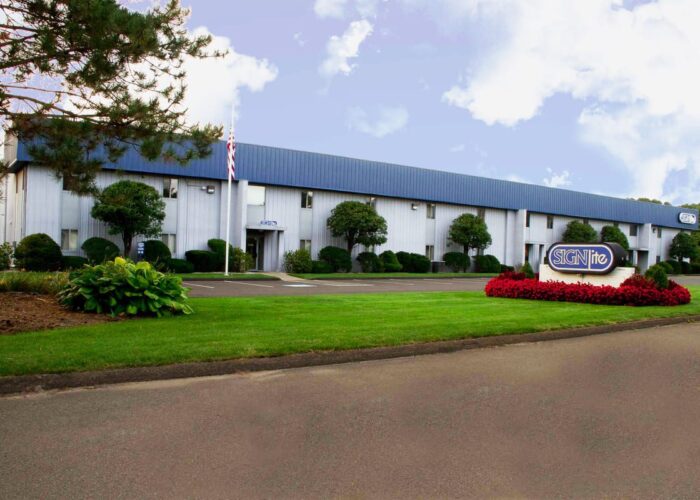
Compliance is straightforward with the right partner. At SIGNLite, we design, fabricate, and install ADA compliant signs for businesses across Connecticut, and we take care of the technical details so you don’t have to wonder whether your signs will pass. From tactile room signs to complete wayfinding systems, every sign we make meets the standards and suits your space.
We’re based in North Haven and have served businesses throughout Connecticut for more than 55 years, so we know how to get your ADA signage in CT right the first time. Whether you’re opening a new location, renovating, or just unsure about the signs you have now, we’re here to help. Call us at (203) 239-6799 or reach out to the SIGNLite team to talk through your project and make your space welcoming to everyone.